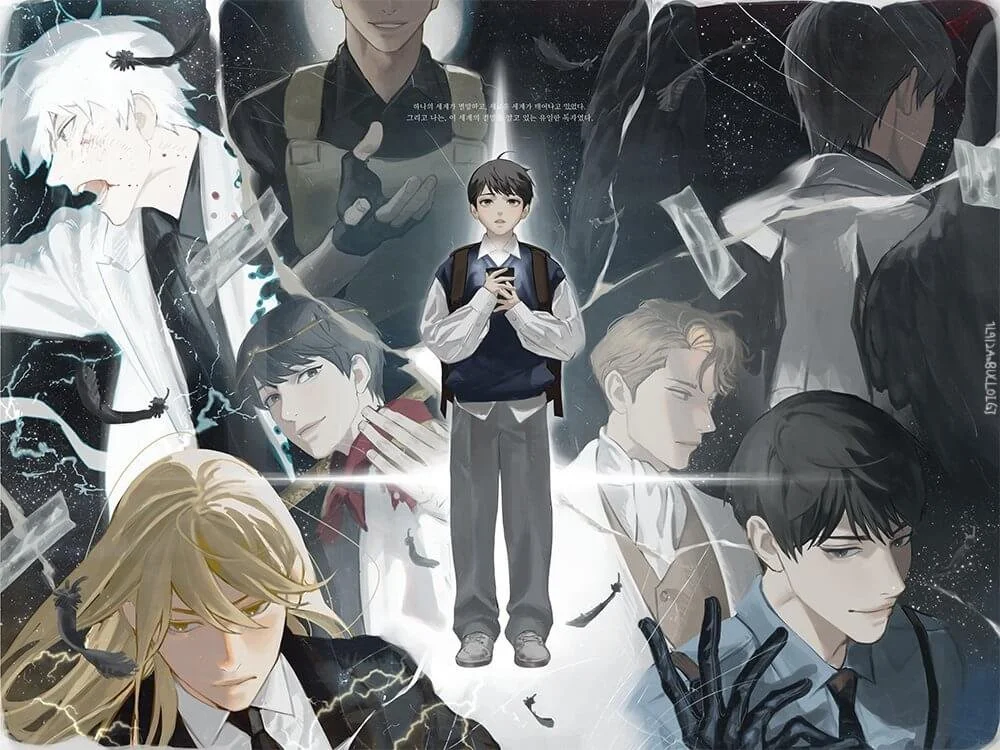
Omniscient Reader’s Viewpoint Story Arcs Explained
Introduction
A story arc is a connected block of chapters built around one goal, one setting, or one enemy. Instead of tracking 500+ individual chapters, fans group the plot into arcs to talk about it more easily.
Omniscient Reader’s Viewpoint is naturally split this way because Kim Dokja’s journey moves through distinct “scenarios,” each with its own cast, stakes, and tone. This guide walks through each major arc so new readers can follow the story and returning readers can jump straight to a favorite section.
- Spoilers get heavier the further down this guide you scroll.
- Arc names used here follow common fan naming, since the author never gave official titles to most of them.
- The novel and manhwa (webtoon) sometimes pace scenes differently, so exact episode counts can shift slightly between formats.
Quick Navigation
- Introduction
- What Are Story Arcs in ORV?
- Complete Story Arc List
- Arc Summaries
- Which Arc Is the Best?
- Reading Order
- Frequently Asked Questions
What Are Story Arcs in ORV?
An episode is a single release, usually a few thousand words in the novel or one chapter in the webtoon. An arc is a group of episodes that share a location, villain, or objective, closing with a clear turning point.
The novel and manhwa progress through the same overall arcs, but the manhwa sometimes splits or compresses scenes for pacing, so episode numbers between the two versions won’t always match exactly.
Knowing the arcs matters because ORV rewards long-term memory: characters, items, and throwaway lines from early arcs often return with huge payoff much later. Reading arc by arc also makes it easier to pause and resume a very long story.
Complete Story Arc List
The table below groups the story using the simplified arc names most fans search for, since the full unofficial breakdown actually runs to over twenty micro-arcs.
Arc | Approx. Episodes | Main Focus |
Scenario 1 | 1–15 | Kim Dokja enters the apocalypse and clears the first survival trial |
Kings | 44–66 | A war between “kings” across the Seoul subway stations |
Peace Land | 118–140s | A theme-park scenario shared with Japanese survivors |
Dark Castle | Mid-story | A vampire-themed dungeon and political power struggle |
Demon King Selection | Mid-late story | Contest to decide the new ruler of the 73rd Demon Realm |
Gigantomachia | Late-mid story | War against giants threatening the human world |
Journey to the West | Late story | A cosmic-scale scenario tied to the Outer Gods |
Great War | Late story | Constellations and demons clash on a massive scale |
Final Scenario | Final act | The last confrontation that decides the fate of the world |
Epilogue | Post-story | Life after the scenarios end, told across five parts |
(Episode ranges for the first few arcs are confirmed against the novel’s official numbering; later ranges are approximate; verify exact numbers on the wiki or your reading platform before citing them elsewhere.)
Arc Summaries
Scenario 1
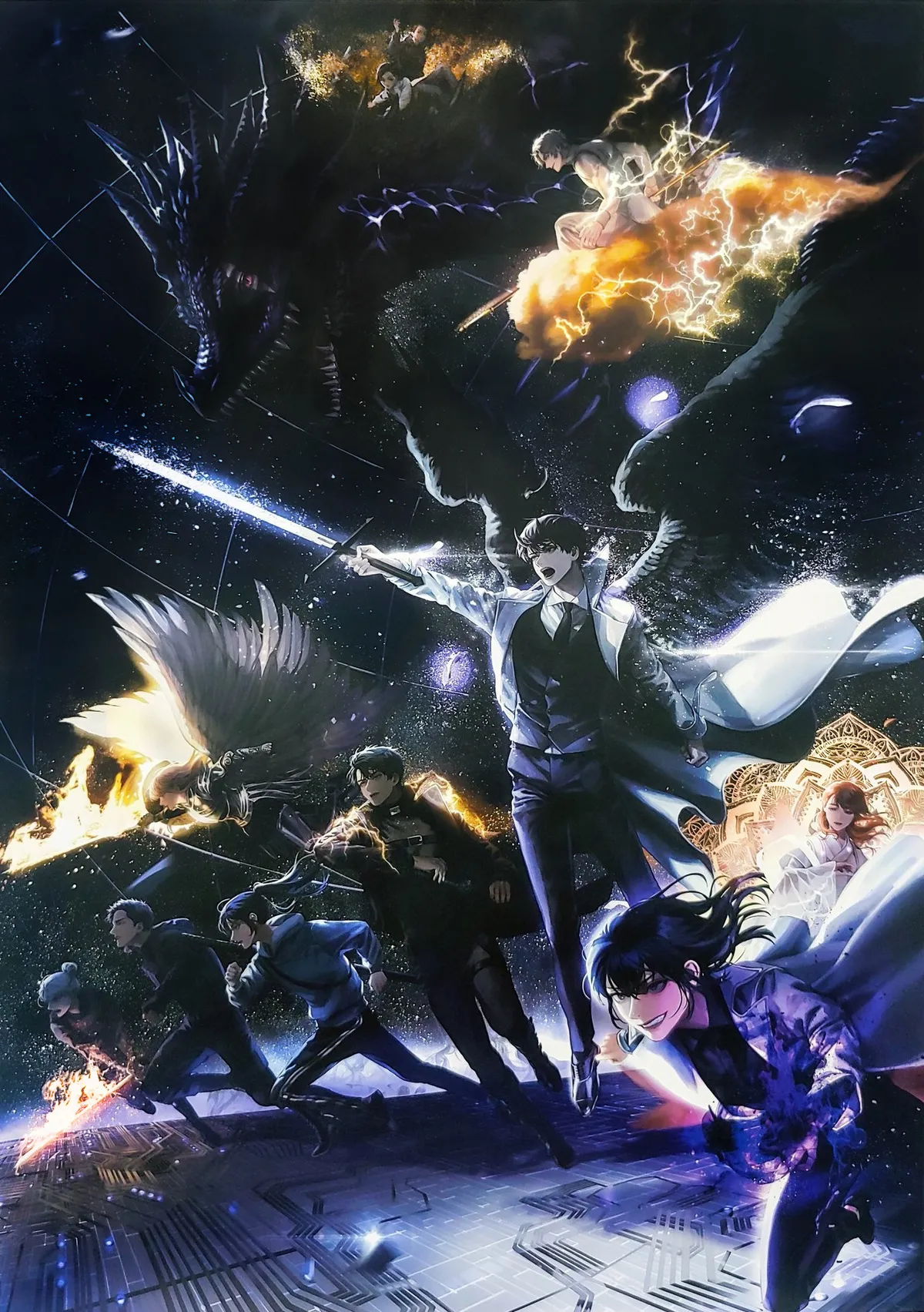
Overview Kim Dokja realizes the novel he read for over ten years, Three Ways to Survive in a Ruined World, has become real life. Trapped on a subway train, he uses his knowledge of the story to keep a handful of strangers alive.
This arc introduces the “reader vs. participant” dynamic that defines the whole series. Dokja isn’t the strongest person on the train, but he’s the only one who knows what’s coming next.
Episode Range: Roughly episodes 1–15
Main Characters: Kim Dokja, Yoo Sangah, Lee Hyunsung, Lee Gilyoung
Main Villains: Kim Namwoon and other desperate survivors turned hostile
Major Events
- The world is rewritten into the setting of Dokja’s favorite novel.
- The first “scenario” forces the train’s survivors to prove their will to live.
- Dokja secretly manipulates outcomes using knowledge only he has.
Character Growth: Dokja moves from passive reader to active planner, setting up his role for the rest of the story.
Why This Arc Matters: It establishes the premise, the stakes, and Dokja’s core power: knowing the story before it happens.
Fun Fact: The train scenario mirrors the opening chapters of the in-universe novel almost exactly, which is exactly the point.
Kings
Overview Survivors across Seoul’s subway network are forced into a war to decide who becomes “king” of the underground. Kim Dokja allies with Yoo Joonghyuk, the actual protagonist of the original novel, to steer events away from its darker original ending.
Alliances shift constantly here as different station factions fight for territory and survival points.
Episode Range: Roughly episodes 44–66
Main Characters: Kim Dokja, Yoo Joonghyuk, Lee Jihye
Main Villains: Rival “kings” and their subway factions
Major Events
- Full-scale war breaks out between competing subway kingdoms.
- Dokja and Joonghyuk form an uneasy but pivotal partnership.
- The old novel’s plot begins visibly diverging from what Dokja remembers.
Important Battles: The climactic multi-faction battle for control of the throne station.
Character Growth: Joonghyuk starts to trust someone else’s judgment for the first time in his many regressions.
Why This Arc Matters: It’s the first time Dokja’s foreknowledge meaningfully changes canon events instead of just predicting them.
Peace Land
Overview A group of chosen survivors is sent into a theme-park-style scenario alongside Japanese survivors, testing cooperation instead of pure combat. The setting is deceptively cheerful compared to the war-torn subway.
Underneath the rides and mascots, the scenario hides real threats and cultural tension between the two survivor groups.
Episode Range: Roughly episodes 118–140s
Main Characters: Kim Dokja, Yoo Sangah, Shin Yoosung
Main Villains: Hostile incarnations tied to the park’s hidden rules
Major Events
- Ten chosen individuals are transported to a shared amusement-park scenario.
- Trust has to be rebuilt between two groups of survivors with different “novels” shaping their worldview.
- A hidden threat inside the park forces the group to cooperate or fail together.
Why This Arc Matters: It broadens the world beyond Korea for the first time, hinting that other countries have their own “novels” and rules.
Fun Fact: This arc is often cited by fans as one of the more emotional, slower-paced stretches of the series.
Dark Castle
Overview The party enters a gothic, vampire-themed dungeon ruled by a rigid class system. Political maneuvering matters as much as combat here, since the castle’s hierarchy punishes anyone who breaks its rules openly.
Kim Dokja’s group has to work around the castle’s social order rather than simply fighting through it.
Episode Range: Mid-story (exact numbers vary by source; verify before publishing)
Main Characters: Kim Dokja, Han Sooyoung, Jung Heewon
Main Villains: The castle’s vampire nobility and its enforcers
Major Events
- The group infiltrates a strict class-based dungeon.
- Alliances with lower-ranked castle residents become key to survival.
- A power struggle inside the castle spills into the main plot.
Character Growth: Party members lean on subtler skills like negotiation and disguise instead of brute force.
Why This Arc Matters: It shows that not every scenario in ORV is solved by fighting; some require outsmarting a system.
Demon King Selection
Overview The 73rd Demon Realm holds a contest to choose its next ruler, and Kim Dokja’s group gets pulled into demon politics far from home. The arc leans into court intrigue, ambition, and shifting loyalties among demon factions.
This is also where readers get a much deeper look at the wider Star Stream’s power structure beyond human survivors.
Episode Range: Mid-to-late story (approximate; confirm exact numbers before publishing)
Main Characters: Kim Dokja, Yoo Joonghyuk, allied demon incarnations
Main Villains: Rival demon candidates competing for the throne
Major Events
- A structured competition decides the next Demon King.
- Dokja’s party becomes entangled in demon-world politics.
- Hidden rules of the Star Stream get explained in more depth.
Important Battles: Duels between demon candidates for succession rights.
Why This Arc Matters: It expands the scope of the story from “surviving scenarios” to “understanding the system running the world.”
Gigantomachia
Overview Giant, near-unstoppable beings threaten to wipe out large parts of the remaining human population. This arc ramps up the scale of threats the party faces, moving from local battles toward world-ending stakes.
Teamwork across multiple allied factions becomes essential, since no single fighter can handle a giant alone.
Episode Range: Late-mid story (approximate)
Main Characters: Kim Dokja, Yoo Joonghyuk, allied constellations
Main Villains: The giants themselves, alongside whoever is directing them
Major Events
- Giant-scale enemies attack human strongholds.
- Multiple allied groups combine forces for the first time at this scale.
- The party’s overall power level jumps sharply to survive.
Character Growth: Side characters introduced earlier finally get moments to shine in a full-army fight.
Why This Arc Matters: It’s a clear escalation point that signals the story is moving toward its final, largest conflicts.
Journey to the West
Overview: This arc borrows heavily from the classic Journey to the West mythology, sending the party through a cosmic-scale scenario tied to ancient, powerful Outer Gods. The tone shifts toward myth and legend rather than modern apocalypse survival.
Familiar constellations tied to the source myth play a much bigger role here than in earlier arcs.
Episode Range: Late story (approximate)
Main Characters: Kim Dokja, Yoo Joonghyuk, mythological constellations
Main Villains: Forces tied to the Outer Gods and their servants
Major Events
- The party undertakes a symbolic, myth-inspired journey.
- Outer Gods, some of the strongest entities in the setting, become directly involved.
- The scenario ties earlier lore about “stories” and their power back into the main plot.
Why This Arc Matters: It shows how ORV recycles real-world myths as in-universe “stories” with real power, a theme running through the whole series.
Great War
Overview Constellations and demons finally clash directly, turning smaller regional conflicts into an all-out war. This is one of the largest-scale confrontations in the series, pulling in almost every major faction introduced so far.
Kim Dokja’s choices here carry consequences for the entire Star Stream, not just his own party.
Episode Range: Late story (approximate)
Main Characters: Kim Dokja, Yoo Joonghyuk, Kim Dokja’s Company (full roster)
Main Villains: Hostile constellations and demon factions
Major Events
- A full-scale war erupts between constellations and demons.
- Long-running rivalries and alliances come to a head.
- The scale of destruction forces difficult sacrifices.
Important Battles: The central multi-faction war that gives this arc its name.
Why This Arc Matters: It’s the story’s largest set piece before the final scenario, and it resolves several long-running plot threads at once.
Final Scenario
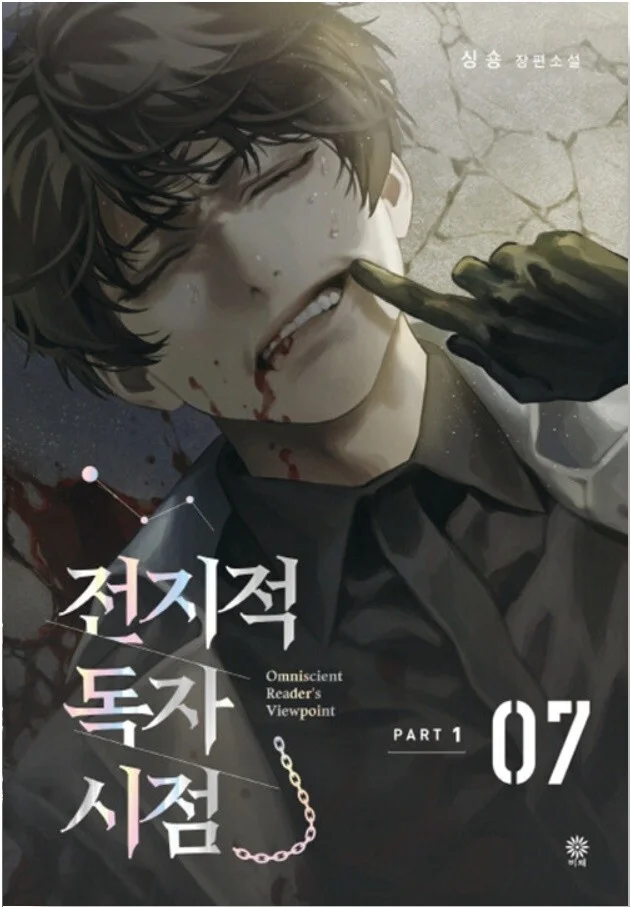
Overview Everything the party has built toward converges here: alliances, sacrifices, and Dokja’s foreknowledge all get tested at once. This arc carries the heaviest emotional weight in the series, closing out most major character arcs.
The ending resolves the core question the series has asked from the start: whether a “reader” can truly change a story’s fate.
Episode Range: Final act (approximate)
Main Characters: Kim Dokja and the full main cast
Main Villains: The story’s ultimate antagonistic force
Major Events
- The last confrontation decides the fate of the world and its “readers.”
- Long-buried secrets about Dokja and the novel’s true nature come out.
- Major character arcs reach their conclusions.
Why This Arc Matters: It’s the payoff for every earlier arc, tying character growth and plot mysteries into a single ending.
Epilogue
Overview Told across five parts, the epilogue shows what life looks like after the scenarios end. It’s quieter and more character-focused than the rest of the series, giving the cast room to breathe.
Many fans treat this section as essential rather than optional, since it resolves emotional threads left open by the finale.
Episode Range: Post-story, five-part structure
Main Characters: Kim Dokja and the surviving main cast
Major Events
- The surviving cast rebuilds a version of normal life.
- Loose emotional threads between characters get closure.
- The story reflects on what “reading” and “living” a story actually mean.
Why This Arc Matters: It reframes the entire series through a calmer, more personal lens after so much large-scale conflict.
Which ORV Arc Is the Best?
Fan opinion splits mostly by taste. Readers who love found-family emotional beats tend to name the Epilogue or Peace Land as favorites, while readers chasing scale point to the Great War or Gigantomachia.
- Scenario 1 wins points for pure novelty and tight pacing.
- The Final Scenario wins points for payoff, since it closes almost every open thread.
- Dark Castle and Demon King Selection get praise for political intrigue over raw action.
There’s no single “correct” answer here, since ORV intentionally varies its tone arc to arc.
Which Arc Is the Longest?
Based on chapter and episode counts, the early-to-mid arcs like Disasters and War of Kings run notably longer than later, more focused arcs.
Arc | Relative Length |
Disasters (part of the “Kings” era) | Very long, 40+ episodes |
Kings | Long, over 20 episodes |
Scenario 1 | Short, around 15 episodes |
Epilogue | Short, spread across 5 parts |
Later arcs tend to be more tightly focused, even when their stakes are higher.
Which Arc Has the Biggest Battles?
The Great War arc and Gigantomachia both stand out for raw scale, throwing entire factions against each other instead of small party fights.
- Great War: constellations versus demons, full army clashes.
- Gigantomachia: giant-class enemies threatening whole regions.
- Final Scenario: smaller in headcount but highest in stakes.
Which Arc Changes the Story the Most?
Kings is the first real turning point, since it’s where Dokja’s foreknowledge starts actively rewriting canon events instead of just predicting them. Journey to the West and the Final Scenario later push those changes to a cosmic scale.
Reading Order
- Novel: The original, most detailed version; start here if you want every internal thought and worldbuilding detail.
- Manhwa: A faster, visual read that compresses some scenes; a good entry point for newcomers.
- Anime: As adaptations progress, expect further compression and some scene reordering for pacing.
Most longtime fans recommend the novel first, then the manhwa as a visual companion once you already know the plot.